





Celtic Tetradrachm Pearl Diadem and Horse of Epona (ca. 2nd-1st century BC | Eastern Noricum)

- Genuine Antique: can never be re-minted
- Celtic Art: almost modern in style
- With Certificate: delivered in a case
- Genuine AntiqueComes from ground and treasure finds, a true one-of-a-kind
- Celtic ArtDistinctive Celtic imagery instead of state portraits
- With CertificateAuthenticity documented, delivered via insured value shipping






- Genuine Antique: can never be re-minted
- Celtic Art: almost modern in style
- With Certificate: delivered in a case
 Price alert
 Share

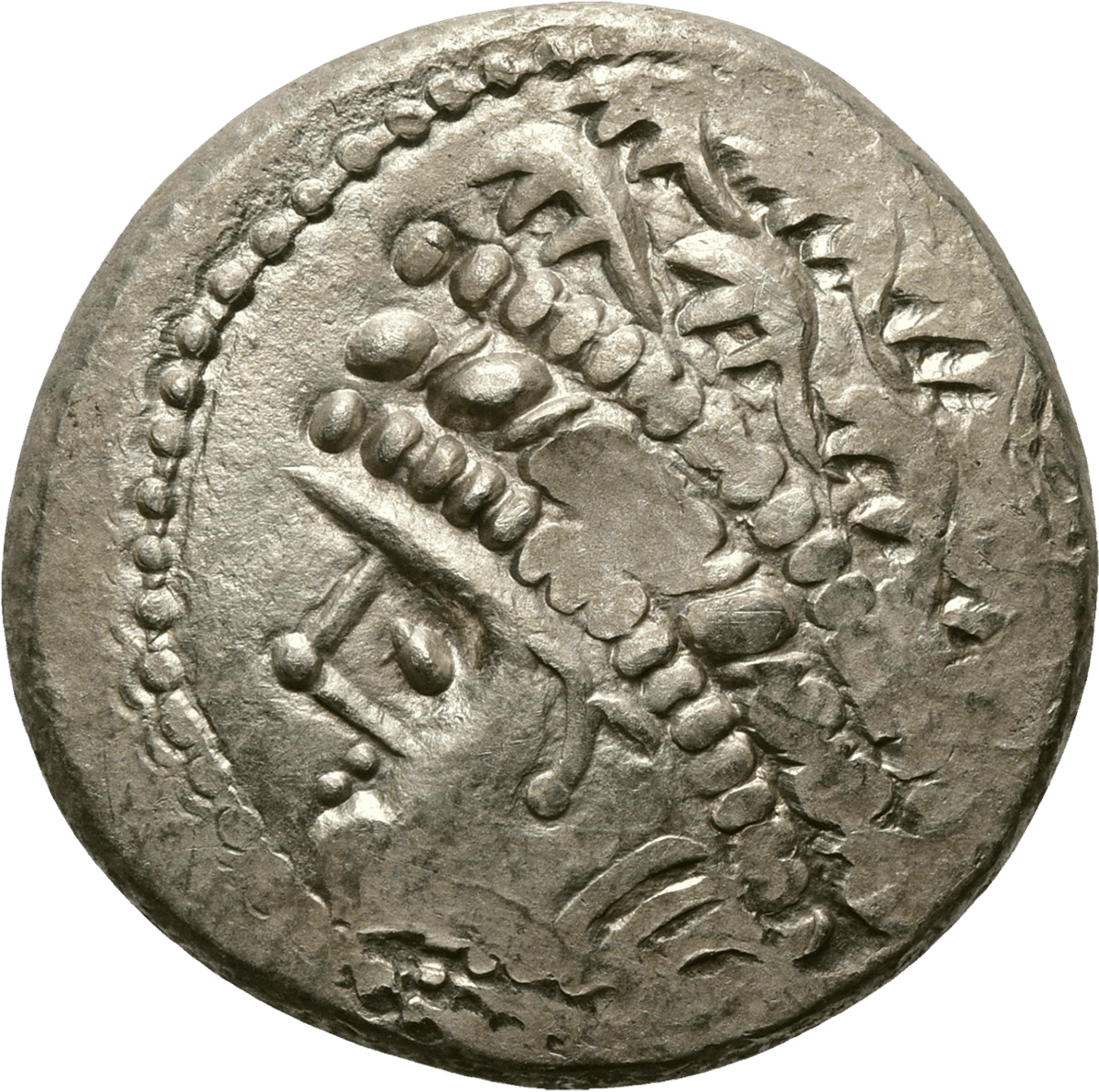
Ancient original · Celtic tribes
Tetradrachm of the TaurisciAbout 2,150 years old.
Nobody knows what the Celts called their coins. Drachm, quinarius and tetradrachm are names given by research, borrowed from the Greeks and Romans.
- Tribe
- Taurisci2nd to 1st century BC
- Diameter
- 22 mm
- Weight
- c. 10.8 g
Nobody knows what the Celts called their coins. Drachm, quinarius and tetradrachm are names given by research, borrowed from the Greeks and Romans.
- Tribe
- Taurisci2nd to 1st century BC
- Diameter
- 22 mm
- Weight
- c. 10.8 g

Celtic tribes · 3rd to 1st century BC
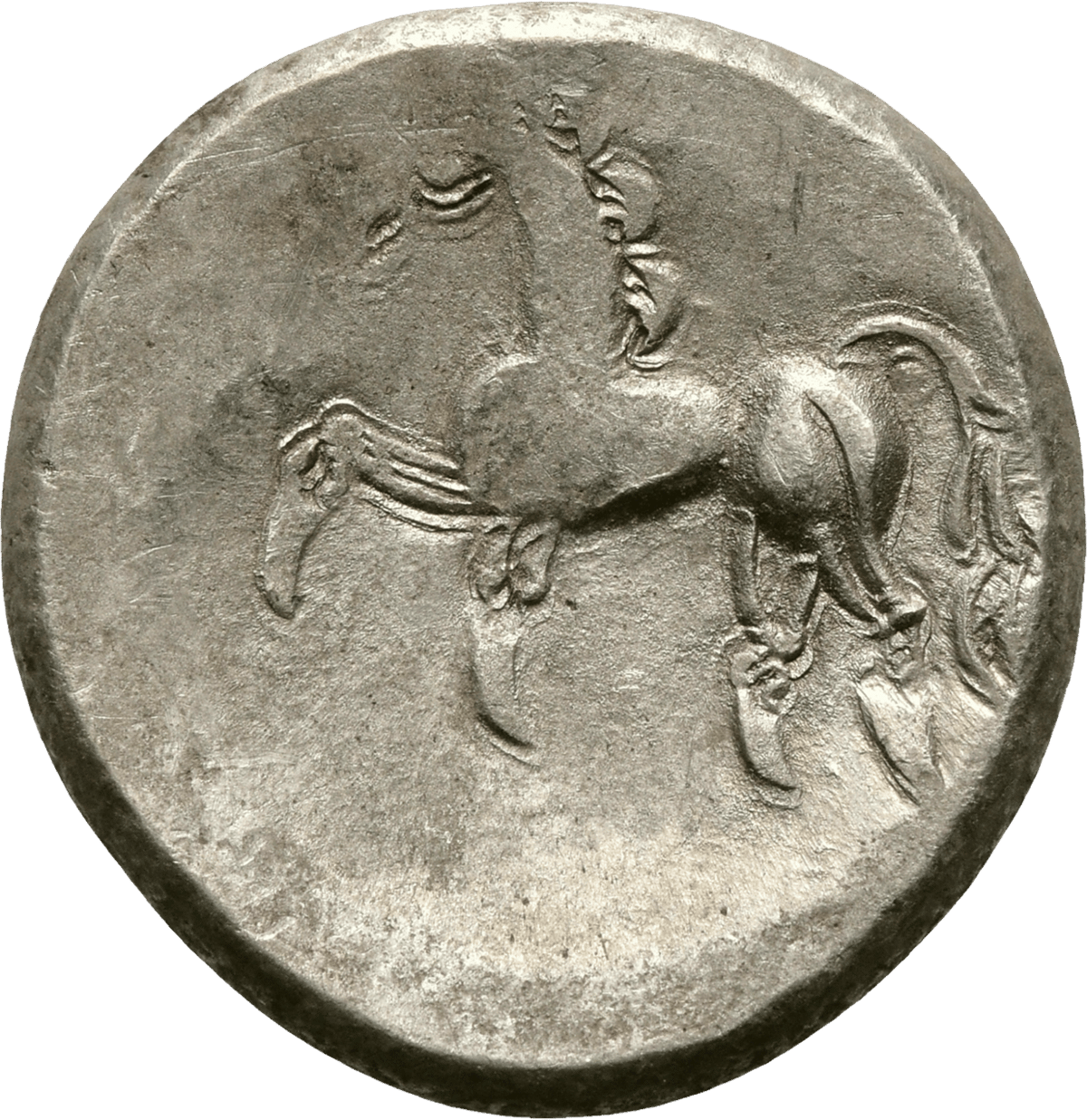
A chariot team becomes a single horse.
The Celts took Greek models and reshaped them over generations, until a head of Apollo became a pattern of arcs and dots and a chariot team became a single horse. That is not incompetence, it is a language of its own. The Vindelici lived in the Alpine foreland between Lake Constance and the Inn, the Volcae Tectosages around Tolosa, today Toulouse. The Taurisci in eastern Noricum struck a horse without a rider.
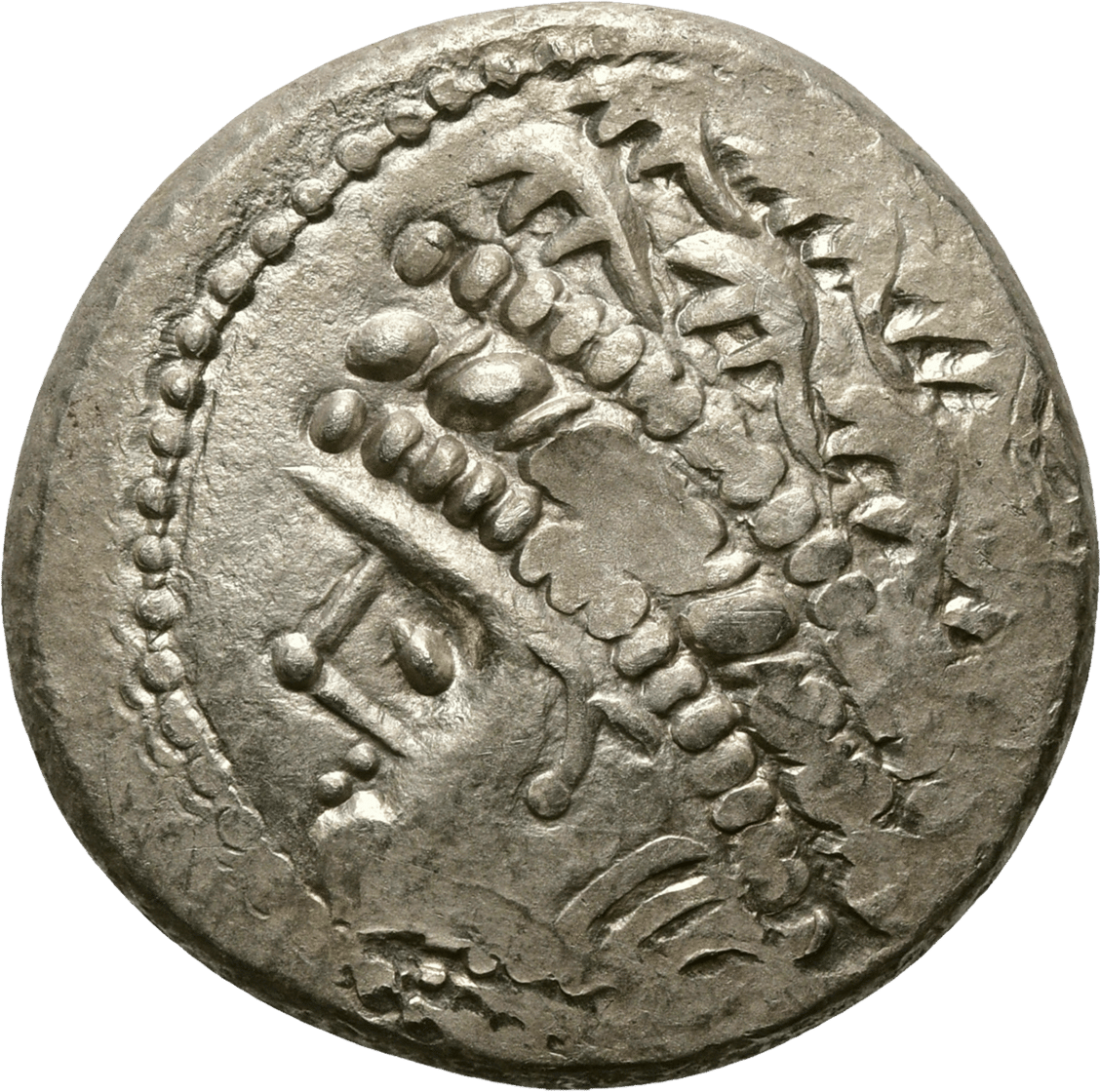
The picture shows an example. The piece you receive may differ in detail. The band above the horse’s back is an ornamental band, not a rider.
At the same scale
Celtic coins beside Greek and Roman ones
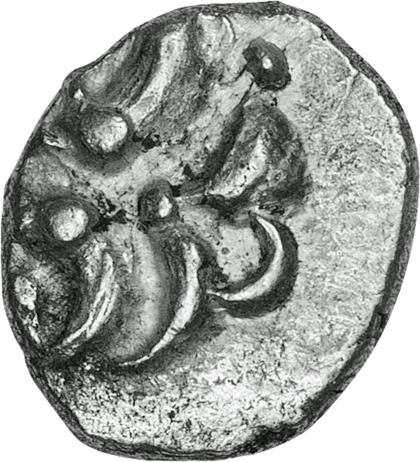
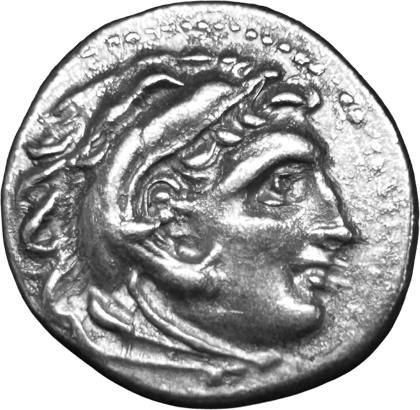
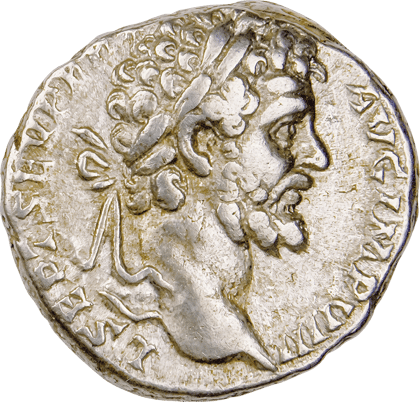
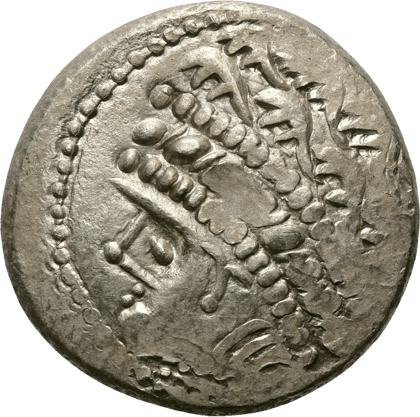
Research named the Celtic coins after Greek and Roman ones. The Celtic drachm measures 12 mm, the drachm of Alexander 18 mm.
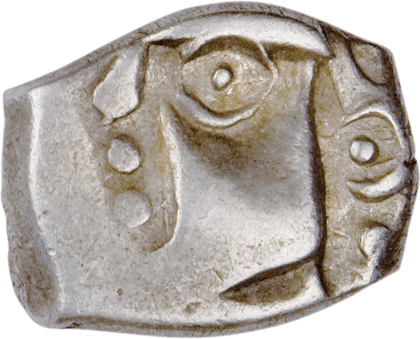 DrachmVolcae Tectosages
12 mm
 QuinariusVindelici
12 mm
 DrachmAlexander the Great
18 mm
 DenariusSeptimius Severus
c. 18 mm
 TetradrachmTaurisci
22 mmthis page
 1 eurofor comparison
23.25 mm
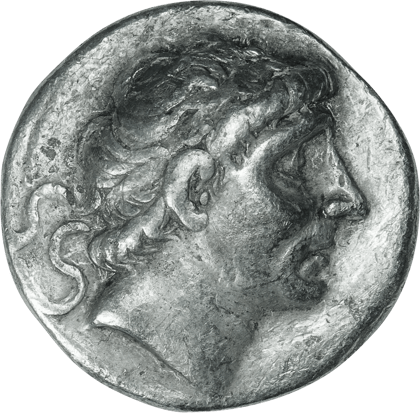 TetradrachmAntiochos I Soter
c. 26 mm
Where it belongs
31 originals from about 1,100 years
Each piece stands at the years of its ruler or of its type. The era of this piece is highlighted; choose another one to see its originals.
Celtic tribes 3rd to 1st century BC · 3 originals
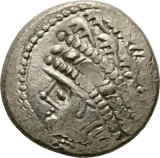 Tetradrachm of the Taurisci2nd to 1st century BCthis page
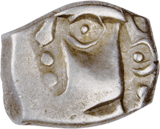 Drachm of the Volcae Tectosages1st century BC
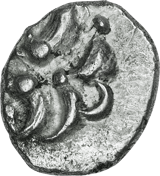 Quinarius of the Vindelici1st century BC

Keeping it
First things first: do not clean it.
The dark layer on bronze and the matte grey on silver are called patina. It has grown over centuries and protects the surface. Polishing it away takes that protection from the piece.
- Hold it by the edgeSkin oil can etch itself permanently into the surface. Take the piece by the rim between thumb and forefinger, over a soft surface.
- Store each piece on its own, and dryKeep each piece on its own in a dry place, in a capsule or an acid-free case. PVC sleeves do not belong there, they attack the surface.
- No agents, no polishing clothNo vinegar, no silver cloth, no ultrasound. According to the Bank of Canada Museum, almost any attempt at cleaning without a conservator leaves damage, mostly from abrasion.

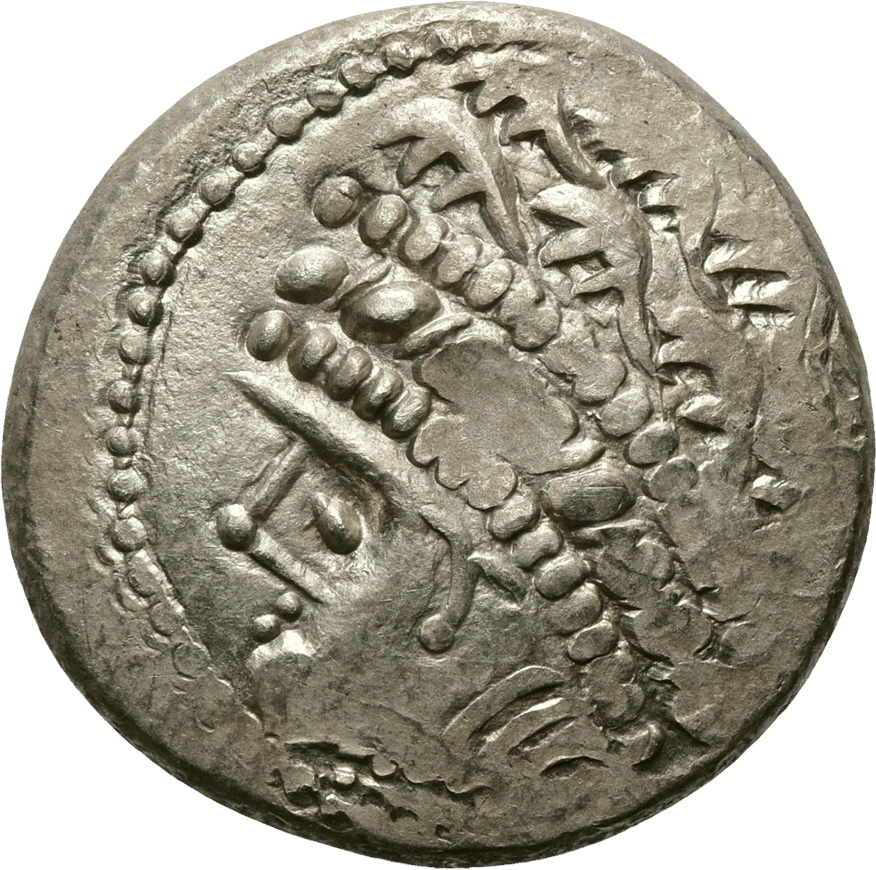
Struck about 2,150 years ago.
The Taurisci and their world are long gone. The piece has remained, with the traces of its circulation.
Celtic Tetradrachm from Eastern Noricum: Silver Money from the Time Before Rome
Some coins are the stuff of stories, others you simply hold in your hand. This one belongs to the second category. An original Celtic tetradrachm from the Eastern Noricum region, minted in the 2nd to 1st century BC – roughly 10.8 g raw weight, 22 mm in diameter, a naturally grown patina. Two thousand years of history, compressed onto a silver disc that once represented purchasing power. The piece is delivered in a case with certificate, insured shipping included.
Pearl Diadem and the Horse of Epona: The Imagery of the Eastern Celts
The obverse shows a strongly stylized head with a three-row pearl diadem facing left – in research usually referred to as a Celticized head of Apollo, derived from Macedonian-Greek prototypes that migrated via the Danube region into the Eastern Alps. On the reverse, a stylized horse strides to the left, on some dies accompanied by a dot or a torque on its chest.
For the Celts, the horse was not mere decoration but a statement. It stood for life, fertility and sovereignty, and is traditionally associated with Epona – the Celtic goddess whose name derives from the Gaulish word epos ("horse"), and whose cult was later even adopted by the Roman cavalry. It is precisely this connection that gave the type its collector's name.
Regnum Noricum: Taurisci, Trade, and a Deliberate Silver Currency
At its greatest extent, the Regnum Noricum stretched from Carinthia, Salzburg and Styria to Slovenia, western Slovakia and northwestern Hungary. Numismatically, a distinction is made between the Western Norici north of the Karawanken and the Eastern Norici – the Taurisci – to the south. Although the Norici possessed rich gold deposits, for trade reasons they adopted the silver currency of their neighbours: tetradrachms for large-scale trade, small silver coinage for everyday use.
The standard works by Robert Göbl ("Typologie und Chronologie der keltischen Münzprägung in Noricum") and Günter Dembski classify these coinages into types named after find sites – Samobor, Gjurgjevac, Warasdin, or the "Eye-type group". With the peaceful incorporation of Noricum into Rome, the tetradrachms were withdrawn from circulation by around 15 BC at the latest. What exists today comes from ground finds and hoards. No one can mint replicas of it anymore.
Key Facts at a Glance
- Material: silver (ancient minting, fineness not standardized – not specified)
- Denomination: tetradrachm
- Raw weight: 10.8 g
- Diameter: 22 mm
- Minting period: approx. 2nd–1st century BC
- Origin: Celtic settlement areas, Eastern Noricum
- Delivery: case with certificate
Condition: Every Piece an Original, Not a Series Product
These pieces are circulated means of payment and bear corresponding traces: darker patina, individual centring, nicks, wear, and in some cases weaker legend areas. This is exactly what makes them appealing. Since the year of minting, the mint, and the reverse variant may differ, the item you receive will differ from the image shown – you are getting an original, not a series product. Please understand that the image in the shop serves as an example and may individually differ from the delivered item in terms of appearance and condition due to historical circumstances.
Ancient Silver Coins in Comparison
Anyone who collects ancient silver knows the Attic owl tetradrachm or the Roman denarius. Both are excellent classics, but also widely available. The Celtic tetradrachm sets a different accent:
- Advantage: Central European origin – money from the Eastern Alps, not from the Mediterranean region.
- Advantage: abstract, almost modern imagery; not a two-thousand-year-old canon of state portraiture, but independent Celtic art.
- Advantage: large module with substantial silver weight rather than a small coin.
- To consider: condition and centring naturally vary more strongly than with Greek or Roman series coinages.
Tangible Asset with Character: Silver as a Foundation
Ancient silver coins combine two motives that rarely coincide elsewhere: historical fascination and physical substance value. Silver has been a monetary and coinage metal for thousands of years; it is durable, tradable worldwide, and liquid. Demand from electronics, solar and medical technology meets a limited supply – an intrinsic value that no fiat money possesses. For many collectors, physical silver therefore serves simultaneously as inflation hedge and as crisis protection, as a medium of exchange for smaller transactions, and as a building block of wealth passed down through generations.
For tax purposes: profits from the sale of silver are generally tax-free, provided the holding period of at least one year is observed.
Gold and silver are humanity's oldest currencies – they have outlived all others. This tetradrachm is the proof: the empire that minted it has long since become history. The metal still lies in your hand.
For collectors of ancient numismatics, for lovers of Celtic art, and for everyone who wants not just to read about the preservation of value but to hold it in their hands: a piece of Europe's original money, one that will never be created again in this form.
Product depiction may differ from the final product.
