





World of the Celts Collection

- Genuine Antique: 2,000-year-old coins
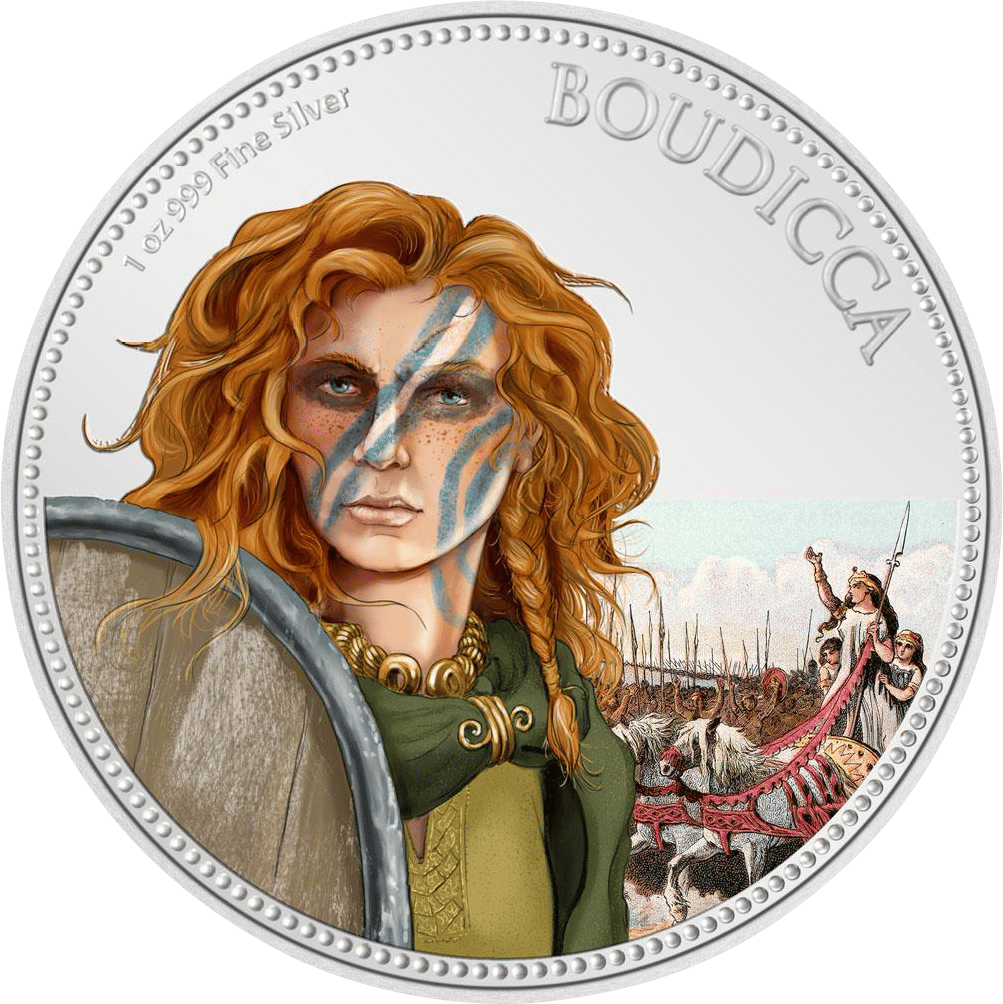
- Colored Boudicca: in Proof quality
- Limited: only 2,000 pieces worldwide
- Genuine AntiqueThree hand-struck Celtic coins from the Iron Age
- Colored BoudiccaOne troy ounce fine silver 999 in vivid color finish
- LimitedAntique originals naturally cannot be reproduced







- Genuine Antique: 2,000-year-old coins
- Colored Boudicca: in Proof quality
- Limited: only 2,000 pieces worldwide
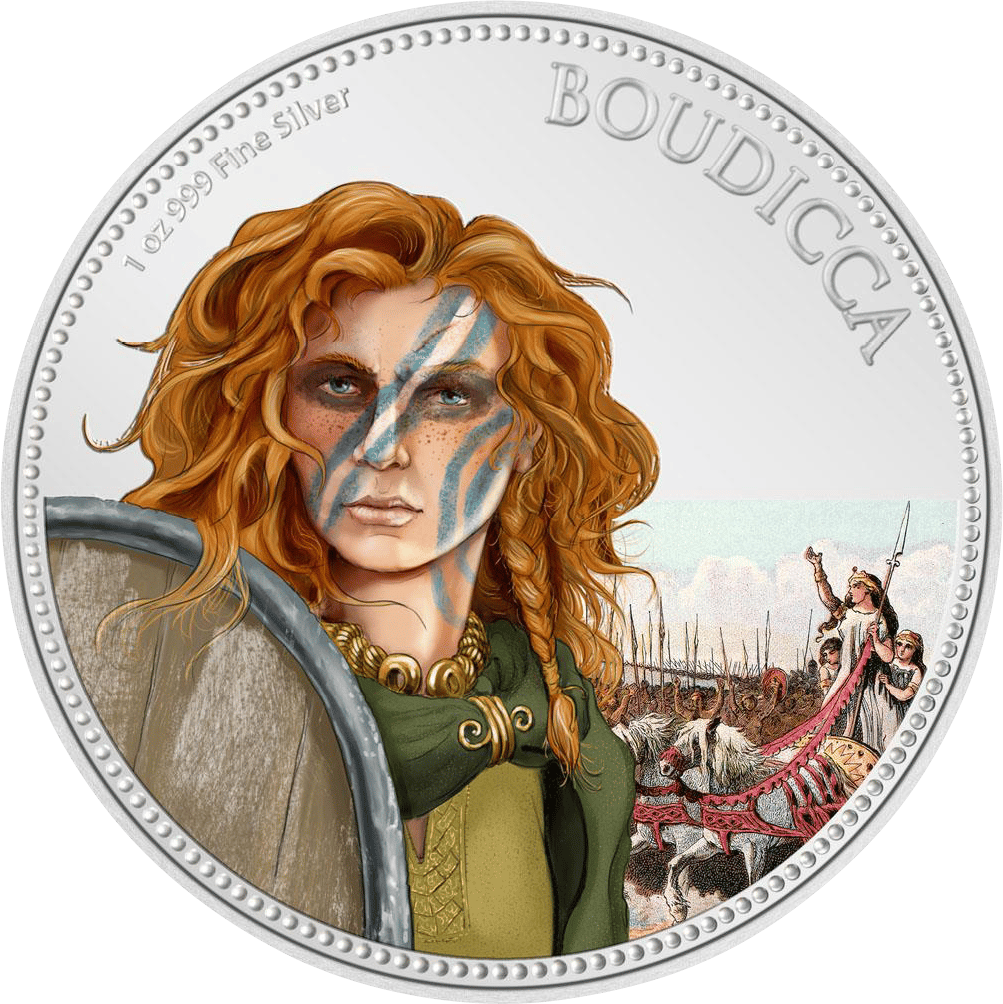
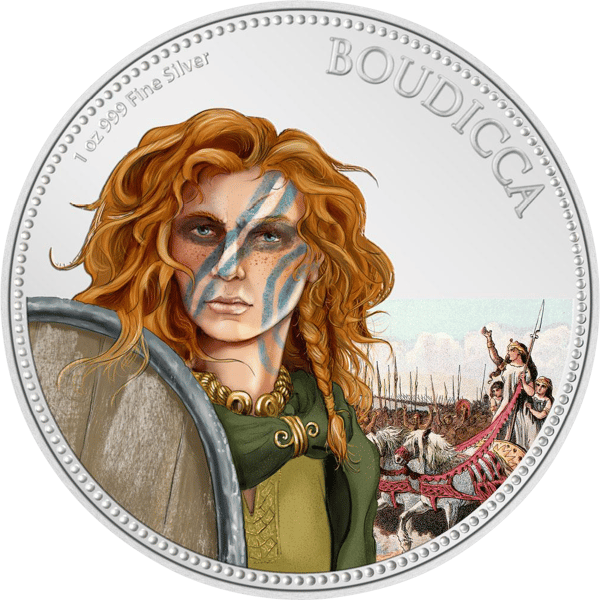 1 ×1 oz Silver Boudicca 2022 PP (Mintage: 2,000 | Proof)
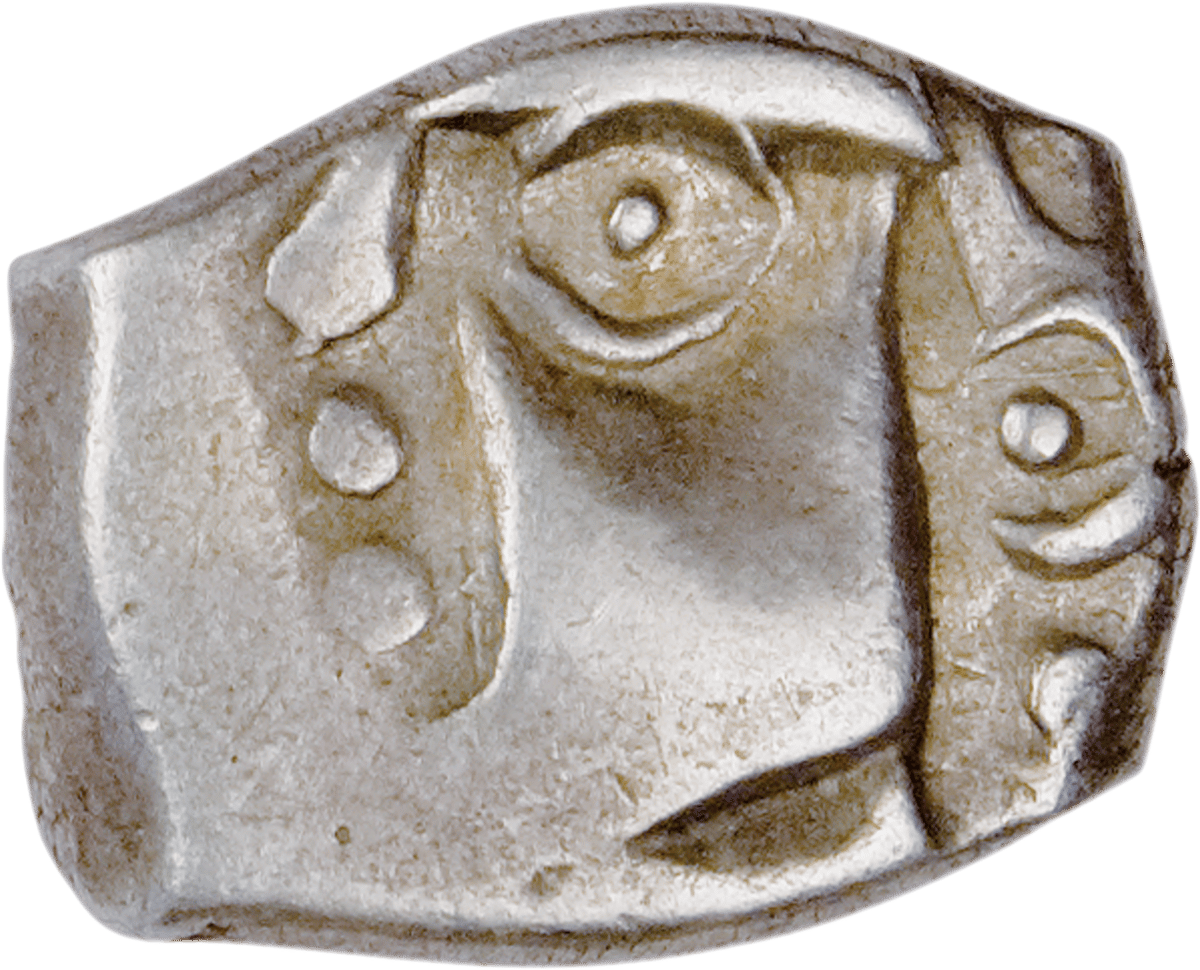
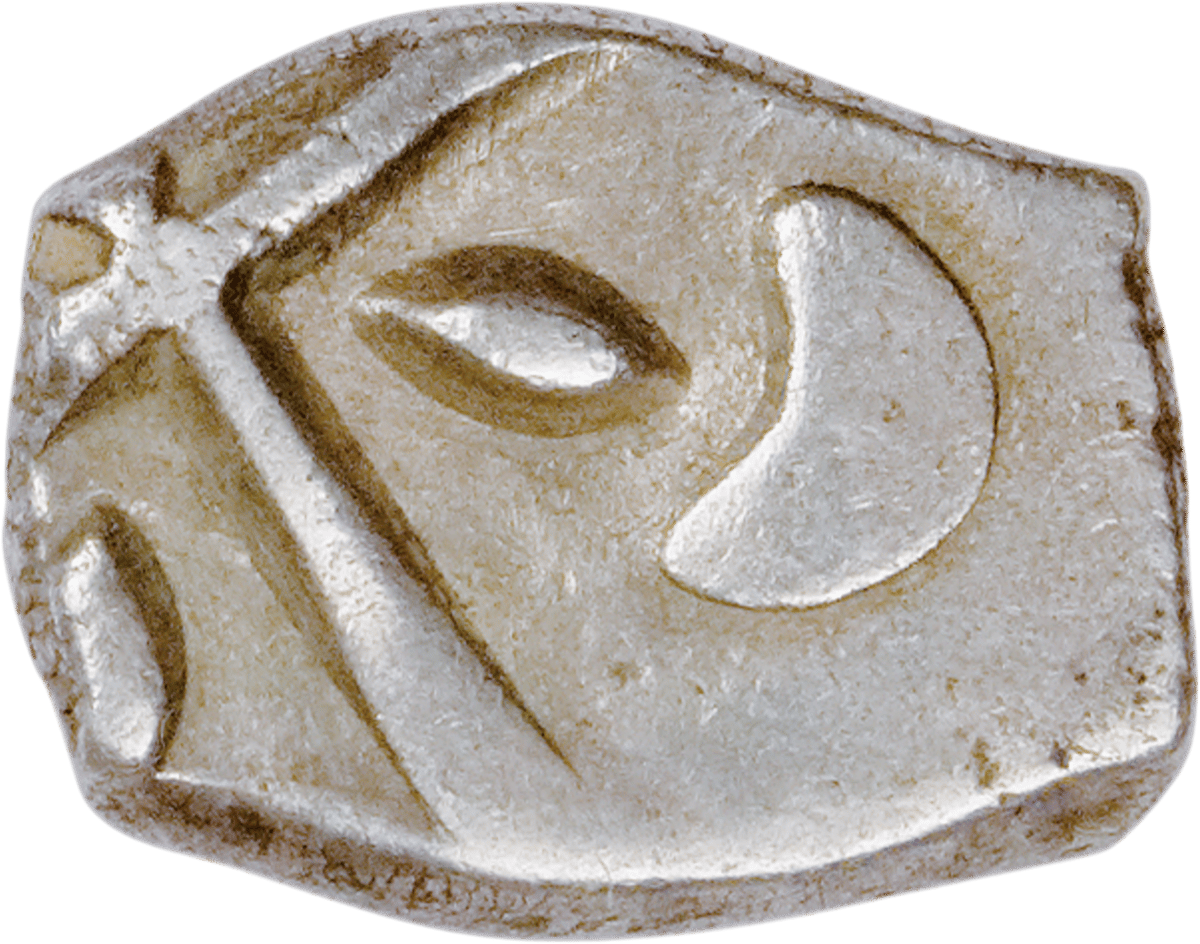
 1 ×Silver Drachm of the Celts (1st Century BC | Tribe of the Volcae Tectosages)
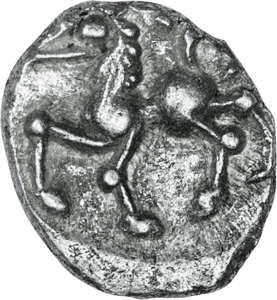
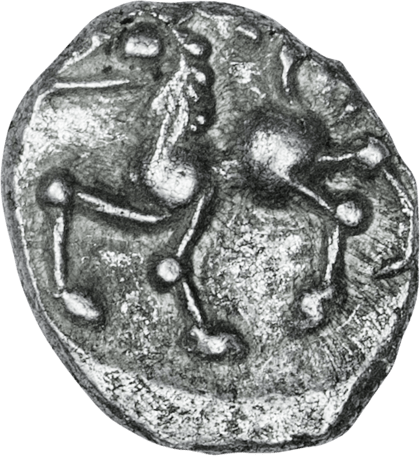
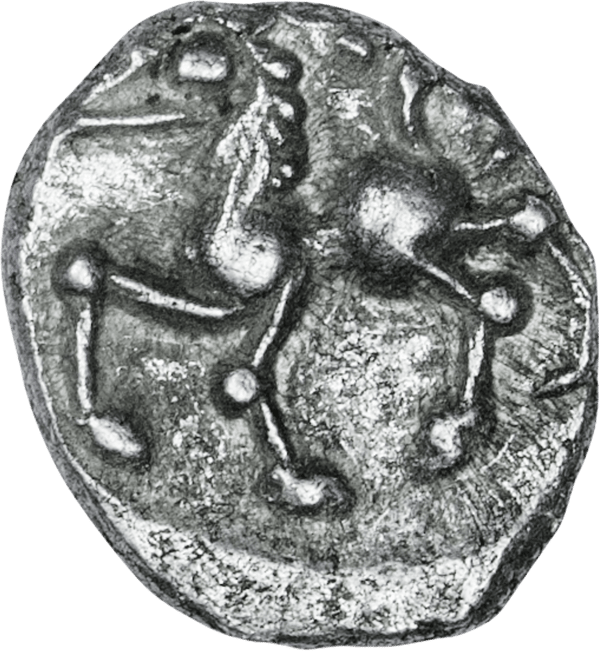 1 ×Silver Quinarius of the Celtic Vindelici (ca. 1st century BC | Alpine foreland between Lake Constance and the Inn)
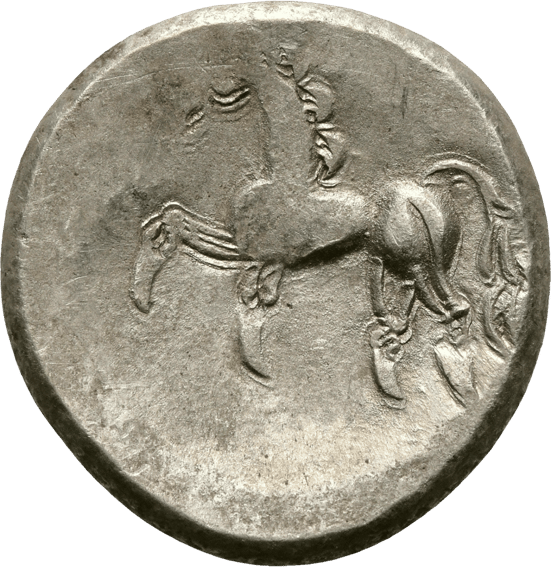
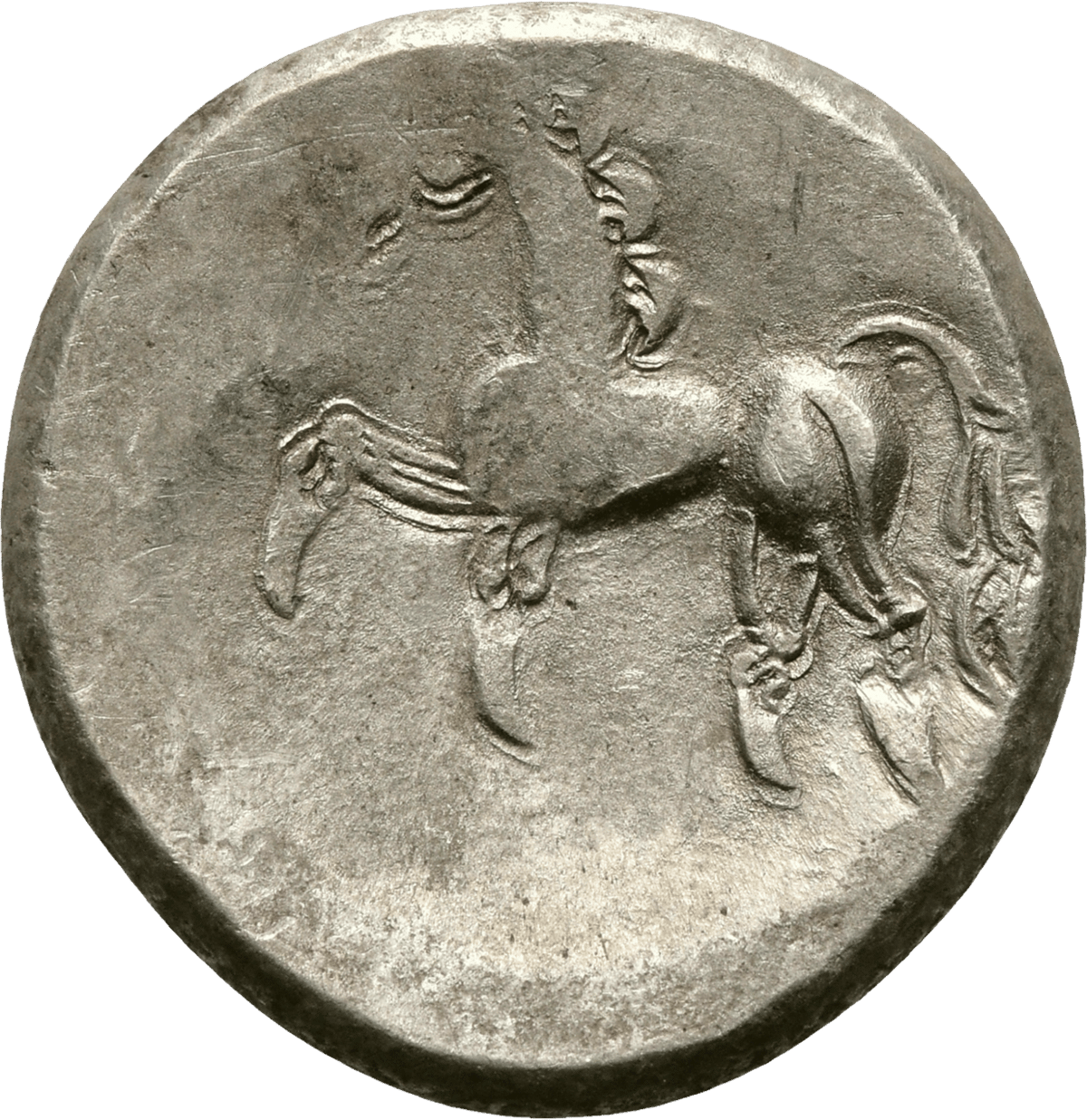
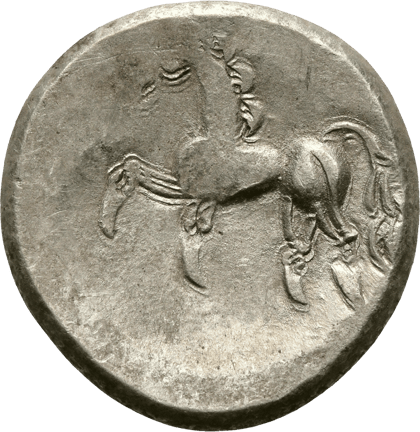
 1 ×Celtic Tetradrachm Pearl Diadem and Horse of Epona (ca. 2nd-1st century BC | Eastern Noricum)
This package saves you £44.61
 Price alert
 Share

World of the Celts · Collection
Three originals.One queen.
Celtic tribes struck these three silver coins by hand more than 2,000 years ago. With them comes Boudicca, queen of the Iceni, as an ounce of silver in proof quality. On the wall all four stand to the same scale.
- Struck
- 2nd and 1st c. BC
- Origin
- Tolosa to Noricum
- Boudicca
- 1 oz silver
Celtic tribes struck these three silver coins by hand more than 2,000 years ago. With them comes Boudicca, queen of the Iceni, as an ounce of silver in proof quality. On the wall all four stand to the same scale.
- Struck
- 2nd and 1st c. BC
- Origin
- Tolosa to Noricum
- Boudicca
- 1 oz silver

Tolosa · 1st c. BC
A rose that became a cross.
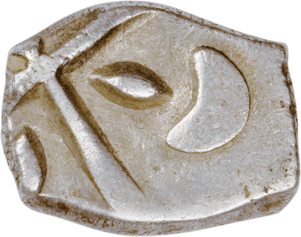
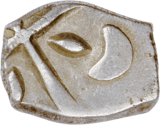
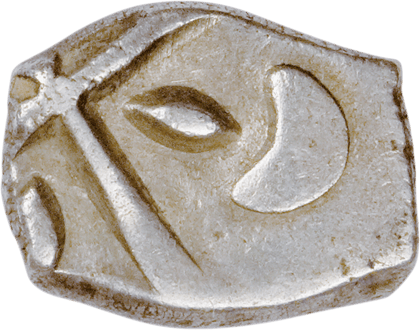
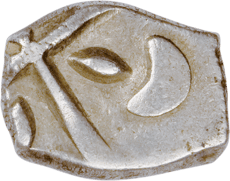
The drachm comes from the region of Tolosa, today’s Toulouse, home of the Volcae Tectosages. Its model was the silver coinage of the Greek city of Rhoda on the Catalan coast, with a rose on the reverse. The Celts turned it into a cross. They chopped the blanks off cast silver bars, which is why many pieces are angular.
According to Strabo, part of the temple treasure of Tolosa lay in sacred lakes. Where those lakes were is still unknown.
Manching · about 150 to 25 BC
Weighed, melted, struck.
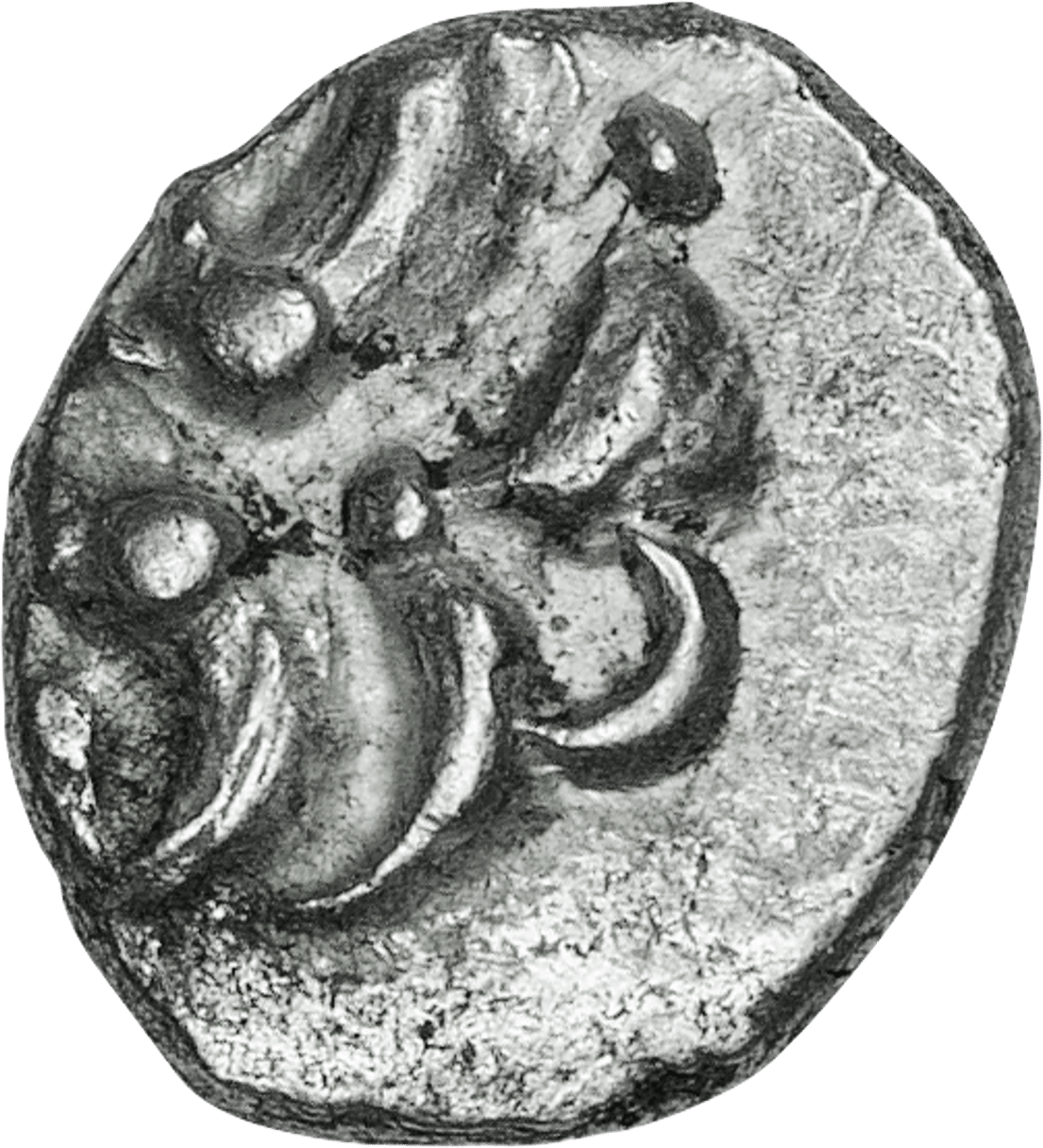
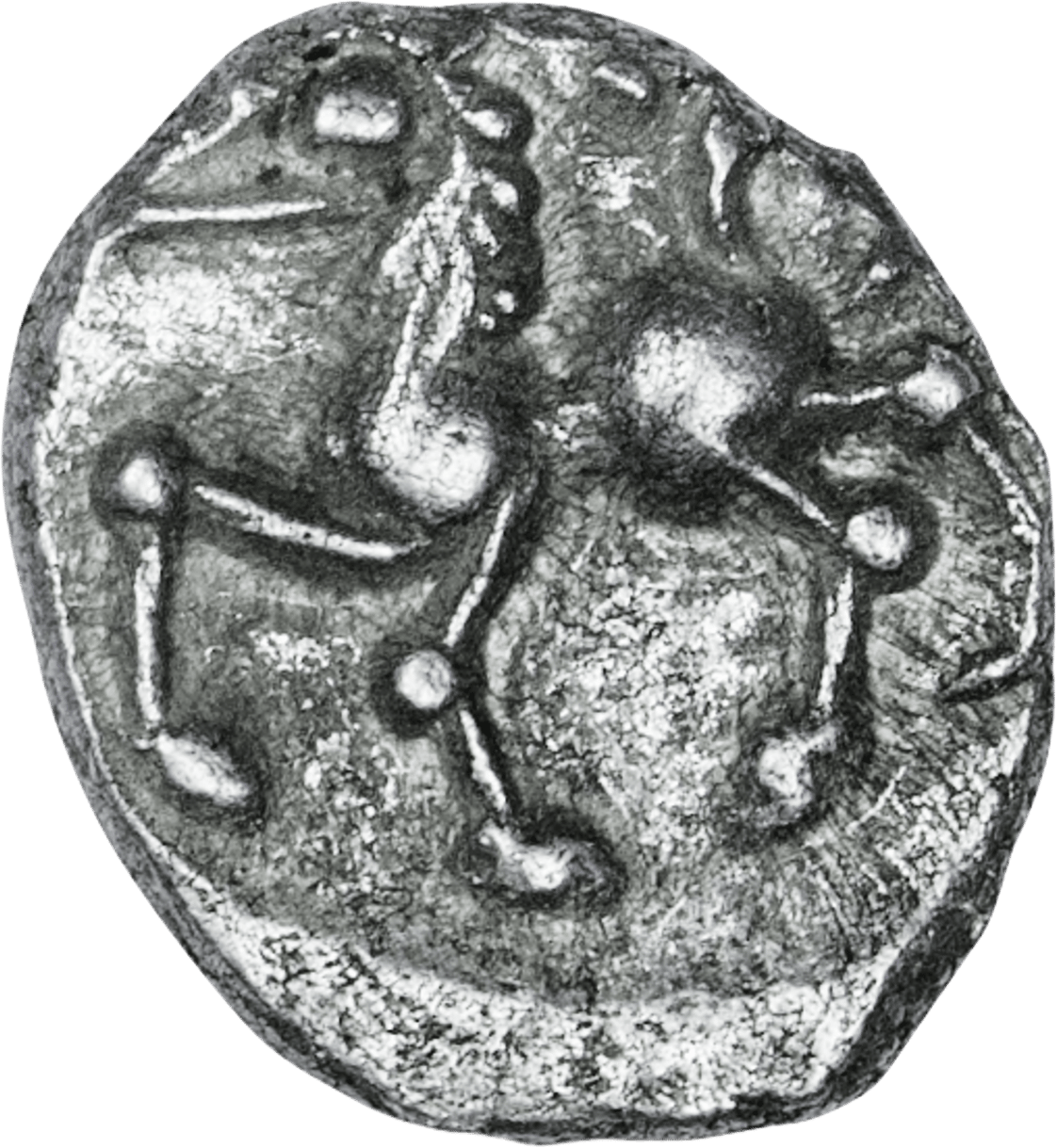
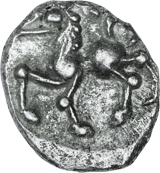
The Vindelici struck the quinarius between Lake Constance and the river Inn. Their main town was probably Manching on the Danube: 380 hectares behind a wall of 7.2 kilometres. There archaeologists found clay plates with small hollows in which weighed silver melted into blanks over a charcoal fire. Between two dies, a single hammer blow gave each blank its image.
Quinarius is a name given by scholars. What the Celts called their money, nobody knows.

Eastern Noricum · 2nd and 1st c. BC
A horse without a rider.
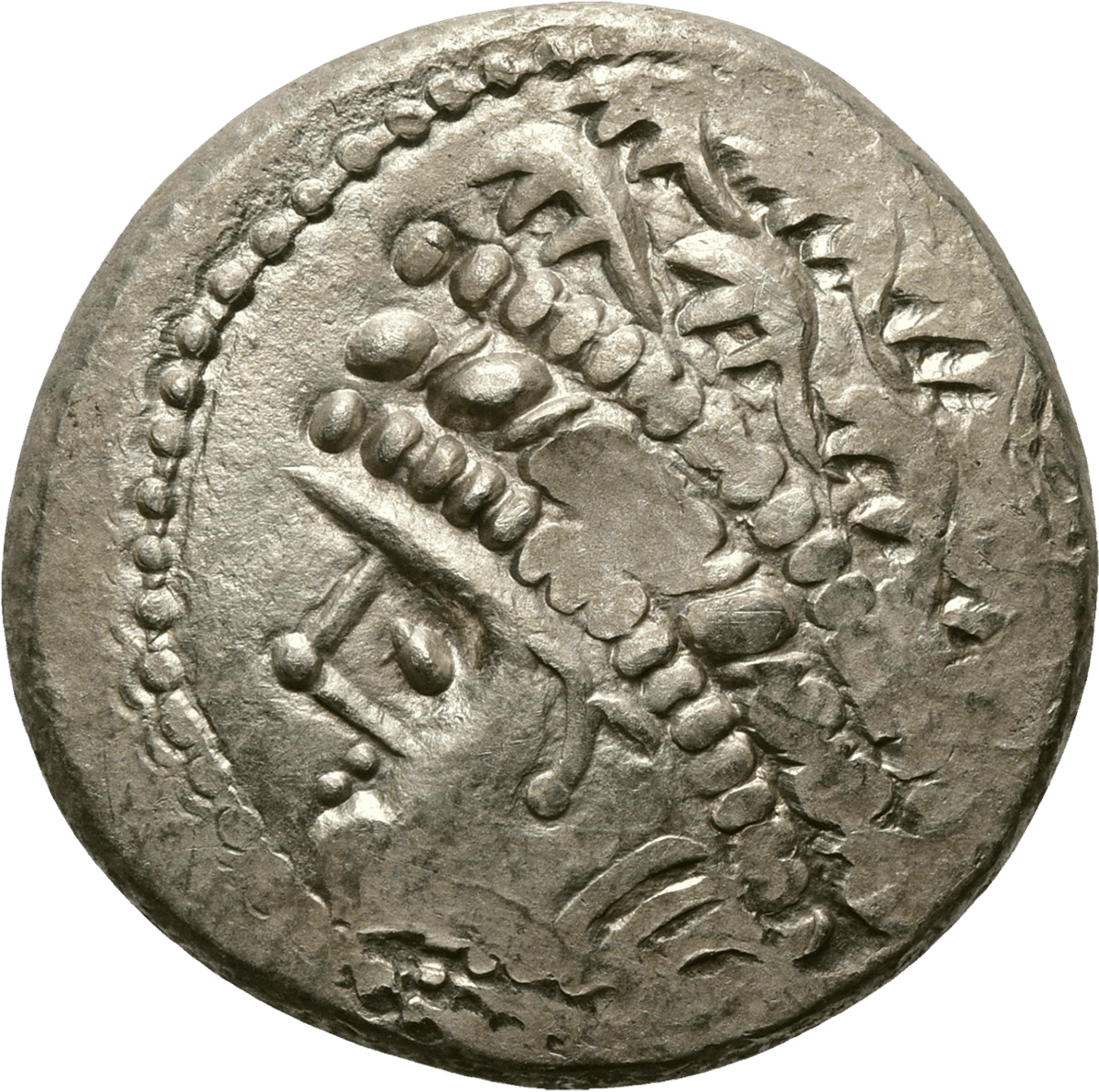
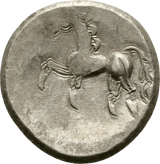
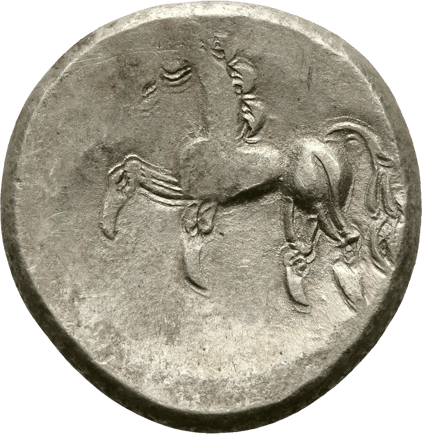
The tetradrachm comes from the Taurisci, who lived south of the Karawanks. They took the head with its three-row pearl diadem from Greek models and put a horse without a rider on the other side. With the Norici further north, a rider sits on it. That is how the two are told apart to this day. The band above the back is an ornament, not a rider.
Polybius reports gold that lay only two feet below the ground in the land of the Taurisci.
Britain · AD 60 or 61
The queen with the golden torc.
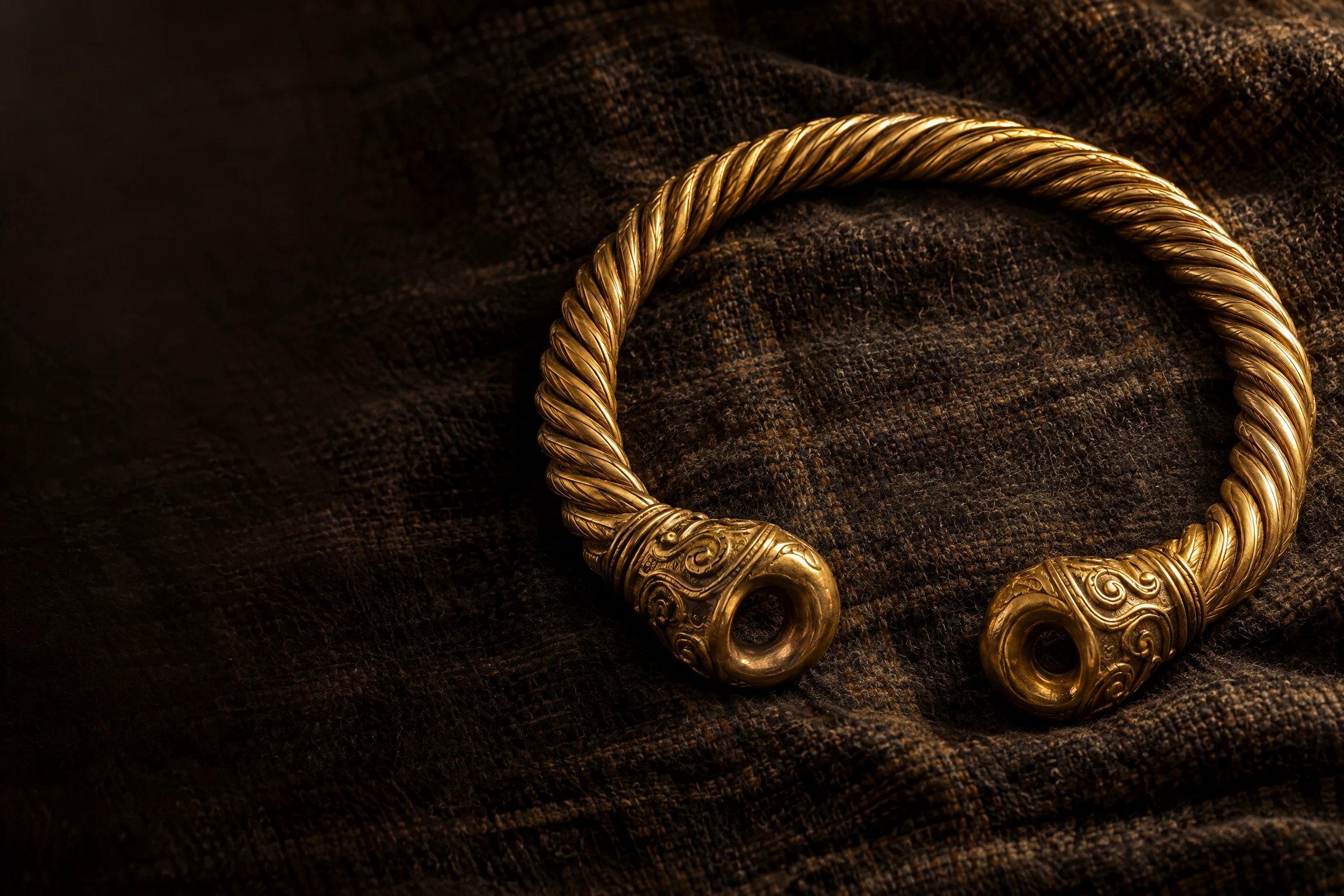
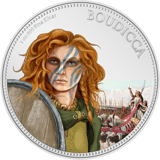
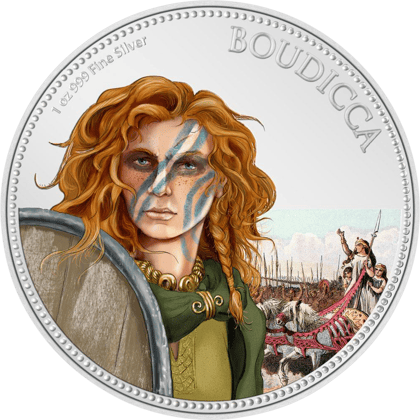
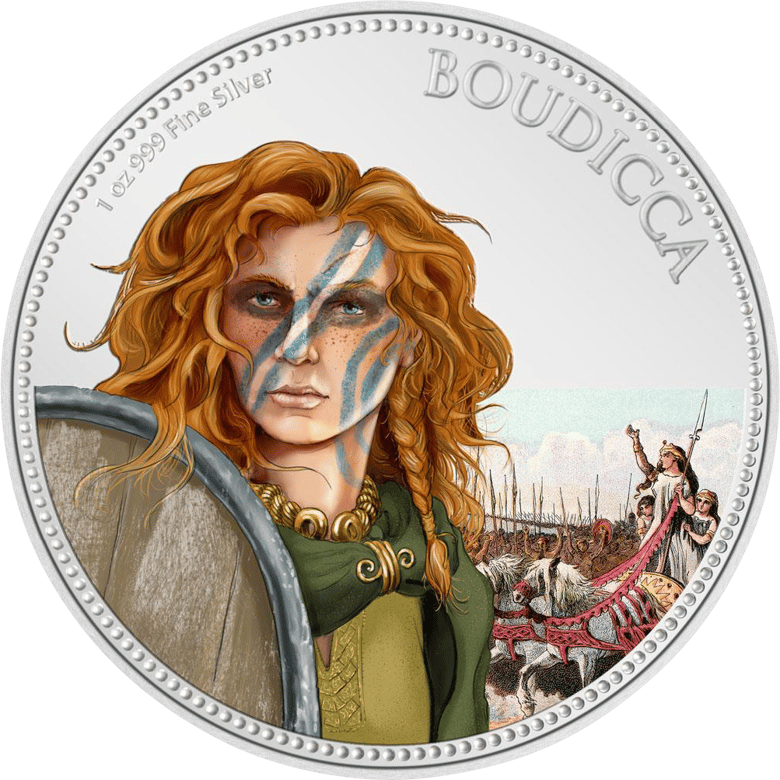
Boudicca led the Iceni in what is now Norfolk. After Rome had plundered her kingdom she rose up, and Colchester, London and St Albans went up in flames. Cassius Dio describes her with long tawny hair and a large golden necklace. With her revolt, the coinage of the Iceni came to an end.
- Issue
- Niue, 2022
- Quality
- Proof
- Mintage
- 2,000
In 1950 a plough brought such a ring to light at Snettisham, in the heart of Iceni land. It weighs 1,084 grams and is now in the British Museum.
Origin and time
From Tolosa to Norfolk.
Three tribes struck the originals, hundreds of kilometres apart. Their lands later came under Roman rule. In Britain, Boudicca rose against it.
- about 150 BCManching is enclosed by a wall of 7.2 kilometres.
- 106 BCRome takes Tolosa.
- 16 and 15 BCNoricum joins Rome, the Vindelici are subdued.
- AD 60 or 61Boudicca leads the Iceni against Rome.
- 2022The New Zealand Mint strikes Boudicca in silver.
Size comparison
Four coins, one scale.
The Boudicca measures 40.7 millimetres, the tetradrachm 22 millimetres. At about 12 millimetres, the drachm and the quinarius are hardly larger than a fingernail.

The tribes are gone.Their silver remains.
Three coins from Celtic workshops and the queen who rose against Rome, in one collection.
World of the Celts Collection: Three Iron Age Originals, One Queen in Proof
Hardly any culture in Europe designed its money as distinctively as the Celts. No ruler portraits, no dates, no legends in the Roman sense – instead abstracted heads, galloping horses, crosses and orbs. This collection brings together three hand-struck Celtic silver coins from the 2nd and 1st century BC with a modern fine silver coin dedicated to the most famous Celtic woman of antiquity. Three pieces were genuine legal tender. One is a work of art. Together they tell a story that stretches from Languedoc across the Bavarian-Swabian Alpine foreland to the Eastern Alps and Britain.
These four coins are included
1 oz Silver Boudicca 2022 Proof – 31.1 g fine silver 999, worldwide mintage of only 2,000 pieces, Proof with colour finishing, face value 2 dollars (Niue), struck by the New Zealand Mint, delivered in a case with certificate of authenticity.
Silver Drachm of the Celts, 1st century BC, tribe of the Volcae Tectosages – 2.3 g, approx. 12 mm, hand-struck cross drachm from southern Gaul.
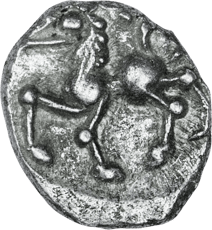
Silver Quinarius of the Celtic Vindelici, approx. 1st century BC, Alpine foreland between Lake Constance and the Inn – 2 g, approx. 12 mm, so-called "Büschelquinar" (tuft quinarius).
Celtic Tetradrachm Pearl Diadem and Horse of Epona, approx. 2nd–1st century BC, Eastern Noricum – 10.8 g, 22 mm, the heaviest piece in the collection.
The combined gross weight of all four coins is 46.2 g. The three ancient coins are circulated currency without standardised fineness – for hand-struck coins that are two thousand years old, there simply was no fineness standard. The Boudicca, on the other hand, offers classic 999 fine silver.
Boudicca: the woman Rome feared
The second issue in the "Women in History" series depicts the queen of the Iceni in vivid colour finishing, with the scene behind her showing her leading her troops into battle. After Rome's exploitation of her tribe, she rose up against the occupiers around 60 AD – the uprising cost tens of thousands of lives and brought Rome to the brink of withdrawal from the island. The reverse bears the portrait of Queen Elizabeth II by Ian Rank-Broadley along with the face value and year of issue. Mirror finish, colour, case, numbered certificate: a collector's coin exactly as one would wish for.
Volcae Tectosages: the cross drachm from southern Gaul
A flan barely larger than a fingernail – and a prime example of Celtic abstraction. The model came from the Greek polis of Rhoda: a woman's head on the front, a rose on the back. Over generations, the Celts transformed this into an angular head that French scholarship calls "tête cubiste", and a striking cross with symbols in its angles. Such drachms are therefore technically known as monnaies à la croix. They were struck in the region around Tolosa, present-day Toulouse.
Vindelici: Celtic small silver from the Alpine foreland
The Vindelici were a group of Celtic tribes between Lake Constance and the Inn; their most important oppidum was located near Manching on the Danube. Their quinarius follows the Roman denarius at half the size. On the reverse, a horse trots along, while the obverse shows a head that became increasingly abstracted into a whirl of tufts over successive minting periods – hence the collector's name "Büschelquinar" (tuft quinarius). In 15 BC, Tiberius and Drusus subjugated the Vindelici. Their name survives in Augusta Vindelicum: Augsburg.
Eastern Noricum: pearl diadem and the horse of Epona
The heavyweight of the group. The obverse shows a strongly stylised head with a three-row pearl diadem, derived from Macedonian-Greek models. On the reverse, a horse strides forward – traditionally associated with Epona, the Celtic goddess whose name derives from the Gaulish word epos ("horse"). Although the Norici possessed rich gold deposits, they minted in silver for trade reasons. With the annexation by Rome, these tetradrachms disappeared from circulation by around 15 BC at the latest. What exists today comes from ground finds and hoards.
Gold and silver are humanity's oldest currencies – they have outlived all others. The empires that struck these three coins are long gone. The metal still rests in your hand.
Why this collection is special
Contrast with concept: ancient circulated currency alongside a modern Proof coin – monetary history and coin artistry in one selection.
Three one-of-a-kind pieces: each Celtic coin was placed by hand between two dies and struck. No flan is perfectly round, and no patina matches another.
Strictly limited: the Boudicca with just 2,000 pieces worldwide, while the ancient pieces are by nature impossible to reproduce.
Substance instead of promises: physical silver as a tangible asset, valued as an inflation hedge and crisis protection.
Value shipping: insured and discreet delivery.
Ancient hand-struck coin or modern bullion coin?
Bullion classics such as the Maple Leaf or Vienna Philharmonic rely on standardised fineness and a slim premium – ideal for building up silver weight in a predictable way. The three Celtic coins operate on a different level: their appeal comes from age, rarity and cultural significance, not from metal content alone. Compared to Roman denarii or Greek owl drachms, they score points with their Central European origin and an almost modern-looking visual language. It should be noted that centring, toning and preservation vary more strongly than with series-minted coins. For many collectors, this is precisely where the value lies. The Boudicca, in turn, brings flawless quality, a clear fine weight and a manageable mintage – the perfect complement.
Condition: circulated money with honest traces
These pieces are circulated legal tender and bear corresponding traces: darker patina, individual centring, nicks, wear, and in places weaker legend details. This is precisely what makes them appealing. Since the year of minting, mint and reverse variant can vary, the delivered specimen will differ from the illustration – you receive an original, not a mass-produced item. We therefore ask for your understanding that the image in the shop serves as an example and may individually differ from the delivered item in terms of appearance and condition due to historical circumstances.
Who this collection is suited for
For newcomers to Celtic numismatics who don't want to piece together a collection one coin at a time. For experienced collectors of the "History" series who welcome tribal coinage from three regions in one go. And for anyone who wants not merely to weigh precious metal, but to understand it. Since the year of minting, mint and reverse variant vary among the ancient pieces, the delivered specimen may differ from the illustration – you receive originals, not mass-produced items. As a gift with real conversation value, this collection is hard to beat.
Product depiction may differ from the final product.
